

In his latest blog, Diarmaid Crean, Ethical Expert, explains why putting community teams (and their focus on preventing hospital admission and continuity of care) at the heart of digital strategy is the best way to improve NHS care; for patients, as well as their families and carers.
If the NHS is serious about the shift to neighbourhood health, CIOs need to do something radical: bin their existing strategies.
Not “refresh” or “align”. Bin them.
Why?
Because the centre of digital gravity must move. It must pass from CIOs and their EPR deployments/ improvements, federated data feeds, cloud migrations and equipment refreshes into the hands of the multidisciplinary community teams who are closest to patients in their own homes, in care homes, and across neighbourhoods.
This point applies across community teams which includes nurses, AHPs, social workers, mental health practitioners and support workers – anyone delivering care in homes and neighbourhoods.
These teams own the patient relationship in the community. They want, and need, to be measured by a new overriding outcome: how successful they are at keeping people well at home.
This is the paradigm shift the NHS requires — moving away from counting activity in hospitals, and instead recognising the value of prevention, continuity, and stability in people’s daily lives. Every avoided crisis, every avoided admission, must be seen as success.
The reality we’ve ignored
Digital strategy has been written in offices, away from where care is actually delivered.
At the Future Nurse event I spoke at recently, the room was full of senior nurses who were itching to take ownership of a new direction. They are not waiting for permission. They are ready.
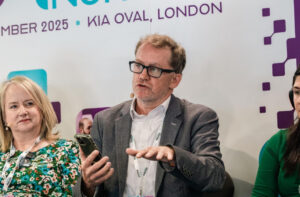
We shared numerous painful stories of our parents ending up unnecessarily in hospital after protracted episodes of substandard care and neglect – in spite of our own “system knowledge” – the stark reality being that others would find it almost impossible to navigate the same labyrinths.
That personal shift – from frustration to ownership – is the heartbeat of the new NHS.
Why? Because this generation of leaders has lived the system both professionally and personally. Almost every one of them is navigating an unsupportive health service on behalf of their elderly parents. They know, viscerally, what is not working. And they are determined to ensure their children are not forced to endure the same failures.
What CIOs must do
For CIOs, this means putting themselves in a subservient position. Not in the sense of diminishing expertise, but in service of a new leadership centre. Their job is to get every communication, every record, every resource into the hands of frontline staff at the point of need. No barriers, no delays, no excuses.
When CIOs shift strategy in this way, the ambition and culture of the NHS itself shifts – towards neighbourhood care, towards prevention, towards dignity.
A challenge to the system
The NHS 10-Year Plan cannot be delivered by rearranging enterprise roadmaps. It requires resolute focus on the frontline. If we want fewer frail patients admitted, fewer families living through avoidable crises, then digital must stop orbiting around organisational silos and start orbiting around the physio, the nurse, the occupational therapist on the doorstep.
This is not a nice-to-have. It is the pivot point. The future of the NHS lies in whether we can let go of the comfort of old strategies and allow those who live the problem daily to write the new one.
***
Find out more about what we do here and get in touch if you would like to discuss how we can help with your digital transformation project.